Quick answer
Ductless mini-split repair means finding why one or more indoor heads won't heat or cool and fixing the cause. Common causes are remote or mode settings, dirty filters, a clogged drain line, a blocked or iced outdoor unit, a failed sensor or board, or a refrigerant leak. You'll get the price before work starts.
Key facts
| Equipment | Ductless mini-split heat pumps |
|---|---|
| What we check | Indoor heads, remotes, drain lines, and the outdoor unit |
| Refrigerant work | Certified technicians only (EPA Section 608) |
| Repair price | You get it before any work starts |
| Service area | Portland, OR and Vancouver, WA |
How does a ductless mini-split work?
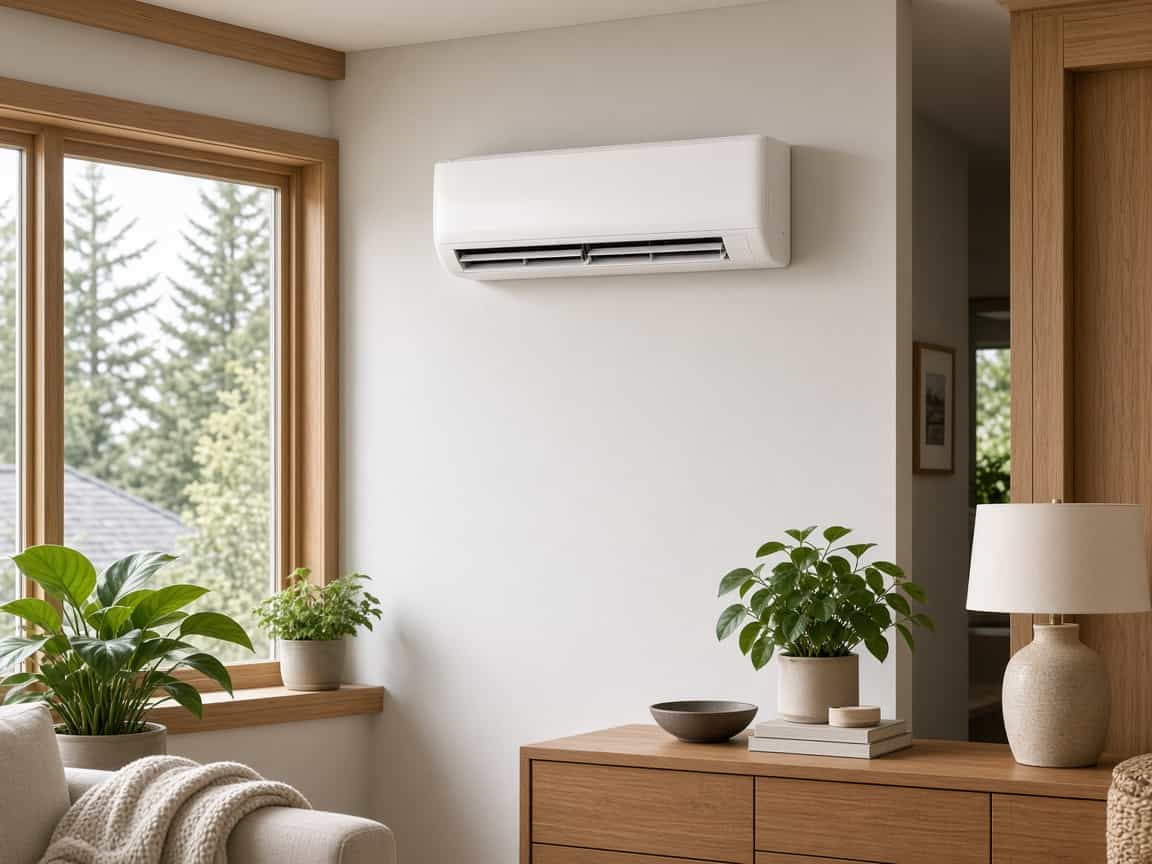
A ductless mini-split is a heat pump that heats and cools without ducts. ENERGY STAR describes one or more head units mounted on an interior wall or ceiling, connected to a unit outside. The outdoor unit pulls heat from the air, even when it's cold, and refrigerant carries it to the heads. In summer, it works in reverse.
Some systems have one head and one outdoor unit. Others have several heads on one outdoor unit. Knowing which you have helps you describe the problem. If one head stops working, the issue may be at that head. If every head stops, look first at the outdoor unit or its power.
Each head has its own filter, fan, sensors, and drain line. That means a problem can stay in one room while the rest of the house is fine.
What are the signs your mini-split needs repair?
Your mini-split needs a look when a room won't reach the set temperature, or when a head acts differently than it used to.
Write down which head is affected, what mode it's in, and when the problem started. Those three details save time on the visit.
- One head blows room-temperature air while the others work
- Water drips from an indoor head or runs down the wall
- A light on the head blinks, or a code shows on the display
- The head doesn't respond to the remote
- Ice on the outdoor unit that doesn't clear
- A musty smell when the head starts
- New rattling, clicking, or gurgling sounds
Not sure what's wrong yet?
Start with the safe checks. Many problems are a setting, a breaker, or a filter.
- Repair first: we fix what can be fixed
- You approve the price before work starts
- Sources listed for outside facts
What's included
What a visit includes
- A technician's diagnosis of the heads and outdoor unit
- A plain explanation of what's wrong and what it takes to fix it
- A straight answer if replacing makes more sense, and why
- The price before any work starts
- Your decision: no work starts until you say yes
- Testing each head after the repair, and cleanup
What you won't get
- Work you haven't approved
- Pressure to replace a system that can be repaired
- Clearing error codes without finding the cause
- Refrigerant handling by anyone who isn't certified
What can you check on a mini-split before you call?
Start with the remote, the mode, and the filters. These are safe checks. Leave covers, wiring, and refrigerant lines for a technician.
- 1Replace the remote's batteries and point it straight at the head.
- 2Set the mode to Heat or Cool, not Auto, Dry, or Fan. ENERGY STAR suggests Heat or Cool so the system doesn't switch modes on mild days.
- 3Open the front panel and check the filters, following your owner's manual. ENERGY STAR says to clean them when they look dirty or the filter light comes on.
- 4Check the breaker for the outdoor unit. Reset it once if it's tripped. If it trips again, stop.
- 5Clear leaves, snow, and anything else crowding the outdoor unit so air can move freely.
What do mini-split error codes and blinking lights mean?
A blinking light or code is the system telling you it found a fault and, often, shut part of itself down. Codes differ by maker and model, so the same blink pattern can mean different things on different systems.
In general terms, codes point to an area: a temperature sensor, communication between the head and outdoor unit, the drain, the fan, or the outdoor unit's controls. A code narrows the search. It doesn't always name the failed part.
Write down the code or take a photo of the blinking pattern before you do anything else. Your owner's manual may list it. Don't keep cutting power to clear it. Tell us the code when you call.
A code that clears and comes back is still useful. Note how often it shows up and what the system was doing at the time, like heating on a cold morning or cooling on a hot afternoon. Patterns like that help a technician find the cause faster.
Why is my mini-split leaking water?
A mini-split head that drips water usually has a drain problem. In cooling mode, the head pulls water from the air. That water runs out through a small drain line. If the line clogs, kinks, or loses its slope, water backs up and spills out of the head.
Some heads use a small pump to move water out when the drain can't run downhill. If that pump fails, water backs up the same way.
A very dirty filter or coil can also cause ice inside the head that later melts and drips. Turn that head off, protect the wall and floor below it, and call. Water inside a wall is worth catching early.
What problems happen at the outdoor unit?
The outdoor unit holds the compressor, fan, and main controls, so a problem there can affect every head. Common issues include a failed fan motor or capacitor, a control board fault, or a refrigerant leak at a line connection.
Some ice and water in winter is normal. ENERGY STAR notes that outdoor units release water when they defrost, which can form icy patches, so watch your step near the unit. Ice that builds up and never clears is a reason to call.
Keep the outdoor unit clear. ENERGY STAR advises unobstructed airflow, so trim back shrubs and don't stack things against it. If roof runoff pours onto the unit, mention it when you call.
Refrigerant work is only for certified technicians. Federal rules under EPA Section 608 bar venting refrigerant during service and require technician certification. A leak at a line connection should be found and fixed, not just refilled.
Should you repair or replace a mini-split?
Many mini-split problems are one part, like a sensor, a drain line, a fan motor, or a board, and those are often worth fixing. We fix what can be fixed, and we tell you straight when it can't.
Replacement may make more sense after a major failure at the outdoor unit, or a leak that keeps coming back. If that's where we land, we say so and show you why. You get the price before any work starts, and you decide.
On a system with several heads, one bad head doesn't always mean replacing the whole system. Ask what it takes to fix that head on its own, and compare that with the bigger job.
What happens when you book a mini-split repair?
A mini-split repair visit follows six steps.
- 1Tell us what's going on. Say which heads are affected, what they're doing, and any code you see.
- 2A technician finds the cause. They check the heads and the outdoor unit and look for the root problem, not just the symptom.
- 3You see your options. We explain what's wrong and what it takes to fix it. If replacing makes more sense, we say so and show why.
- 4You decide. No work starts until you say yes.
- 5We fix it. If it can be fixed, we fix it.
- 6We test and clean up. We run each head, check that it works, and leave the space clean.
Common questions
Why is only one head on my mini-split not working?
The problem is often at that head, such as a dirty filter, a remote or mode setting, a sensor, or a drain issue. Check the remote batteries, mode, and filter first. If the other heads work, the outdoor unit is probably running.
How often should I clean mini-split filters?
Clean them when they look dirty or when the filter light comes on, as ENERGY STAR advises. Your owner's manual shows how to remove them. Dirty filters cut airflow and can lead to ice and dripping.
What does it mean when my mini-split light blinks?
It usually means the system found a fault. The meaning depends on the maker and model. Write down or photograph the pattern and tell us when you call.
Should I use Auto mode on my mini-split?
ENERGY STAR suggests using Heat or Cool instead of Auto. That keeps the system from switching modes on mild days.
Is water dripping from my mini-split's outdoor unit in winter normal?
Yes, some water is normal. ENERGY STAR notes that outdoor units release water when they defrost, and it can freeze into icy patches. Ice that builds up on the unit and never clears is a reason to call.
Why does my mini-split smell musty when it starts?
A musty smell often comes from dust and moisture on a dirty filter or coil inside the head. Clean the filter first. If the smell stays, a technician can check the coil, fan, and drain.
Not sure what's wrong yet?
Start with the safe checks. Many problems are a setting, a breaker, or a filter.
- Repair first: we fix what can be fixed
- You approve the price before work starts
- Sources listed for outside facts
Sources
- Ductless Heating & Cooling — ENERGY STAR (U.S. EPA). Checked 2026-09-24.
- Stationary Refrigeration and Air Conditioning (Section 608) — U.S. EPA. Checked 2026-09-24.
Last updated: · Reviewed by: HVAC Repair Guys